I did not go to Galicia on a wine trip. I went to walk the Camino de Santiago with three of my oldest and dearest friends.
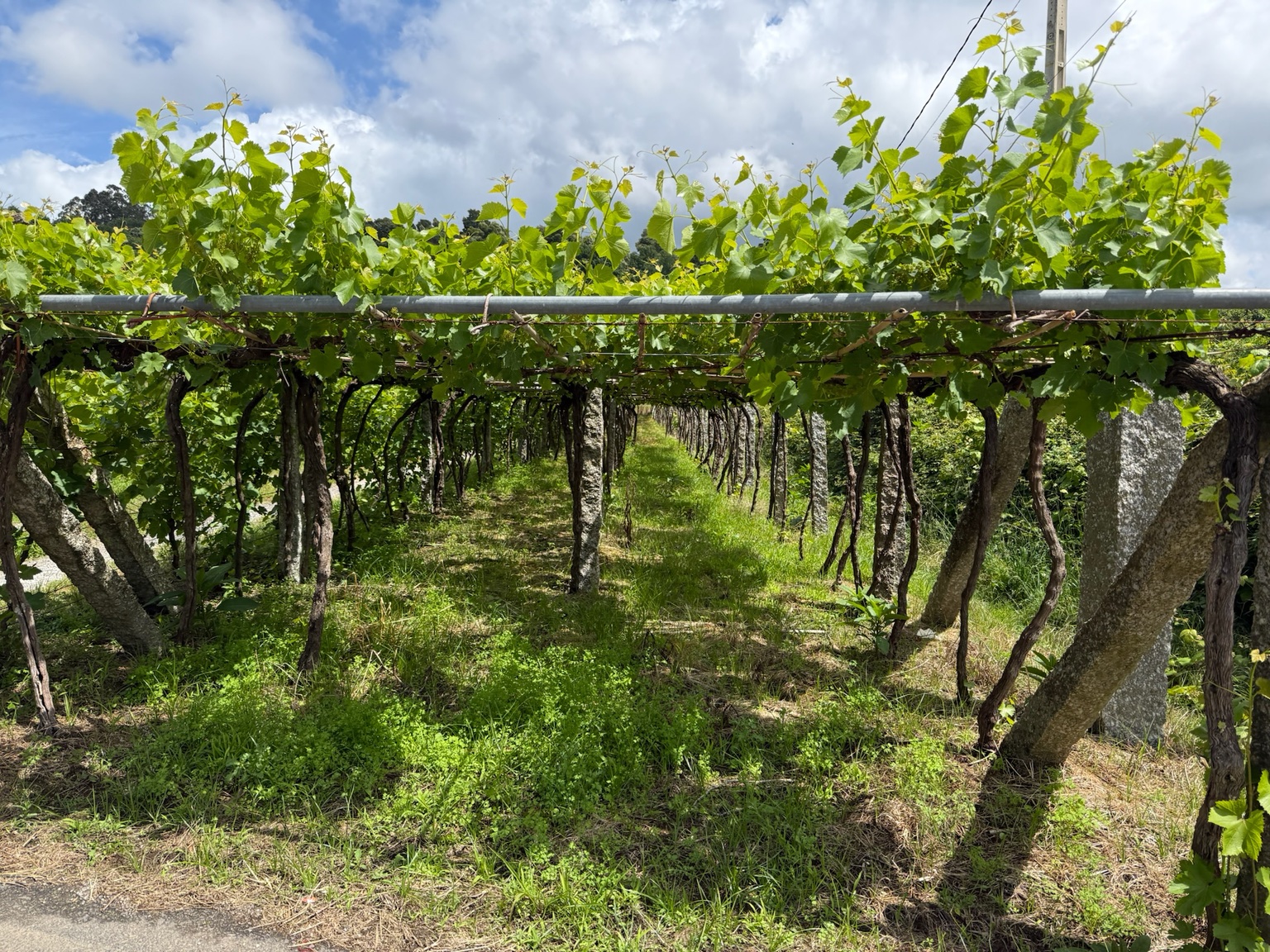
But somewhere between the Atlantic air in Vigo, the vines growing alongside us, the oysters and seafood, the rain beneath our feet, and our arrival in the town of Santiago de Compostela, Albariño became another way of understanding where we were.
By the end, it was no longer simply a grape I enjoyed. It had become part of the memory of the journey: a taste connected to friendship, landscape, discovery, and the first steps toward my own next chapter.
The beginning
Four friends.
Four reasons for walking.
We began with a couple of days in Porto, giving ourselves time to settle in before being driven north to Vigo, where our Camino would begin.
There were four of us: my high school best friends Lynn, Loren, and Allison—and me. We chose to walk together because, in different ways, we are all considering and enjoying what comes next. Each of us arrived with our own reasons for making the journey: space for reflection, something personal to carry, and the hope of reaching the end with a new sense of accomplishment.
From Vigo, we began along the Portuguese Coastal Way before turning inland to join the Portuguese Central Route—even though, by then, we were walking through Spain.
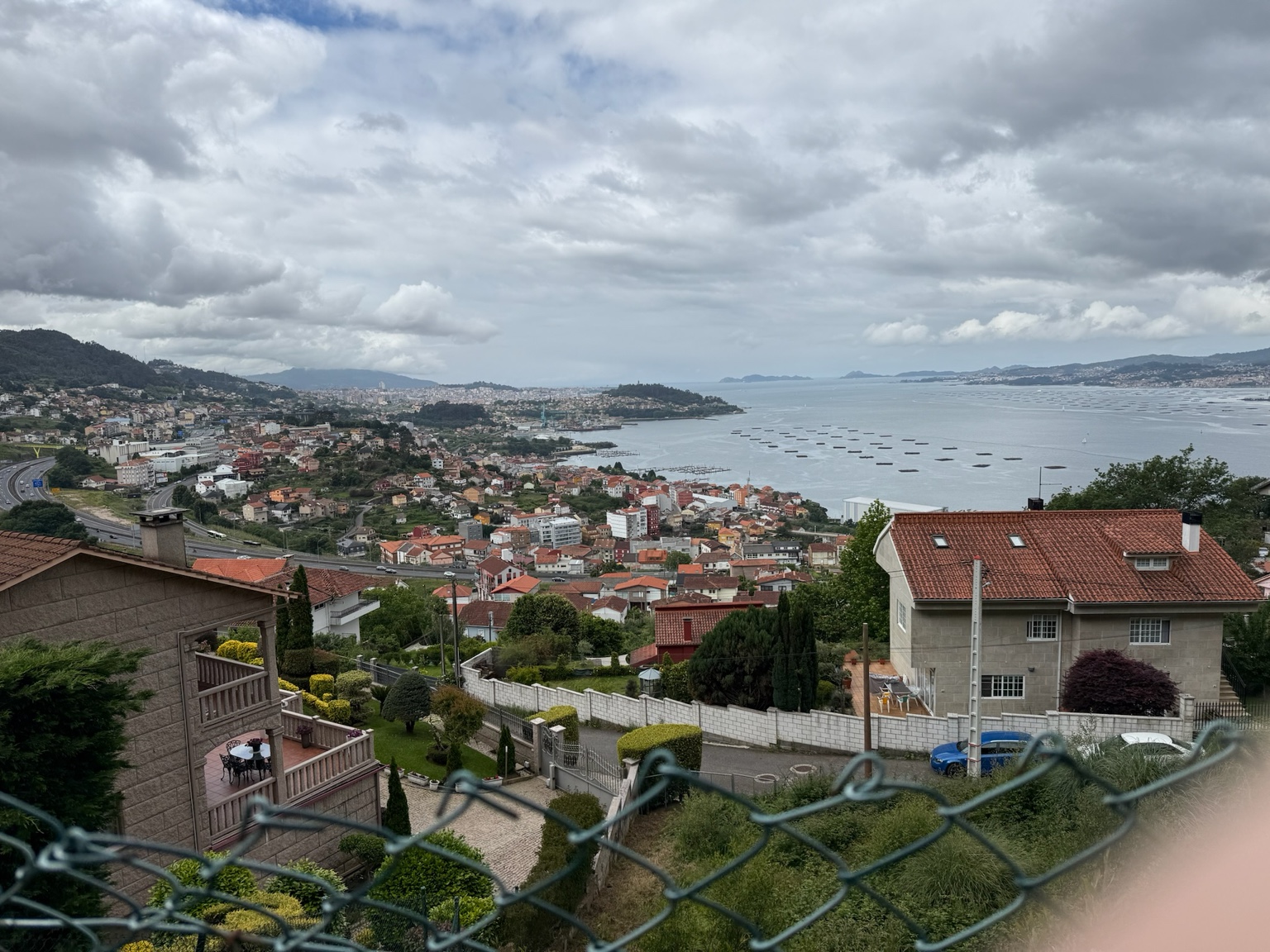
Where the river meets the Atlantic
A wine understood through place.
Vigo felt inseparable from the water. We could see where the river met the Atlantic, smell the sea in the air, and feel the wind coming off the coast. It was breathtaking, chilly, and absolutely gorgeous—the kind of place that immediately makes you more aware of where you are.
That proximity to the Atlantic would follow us throughout the journey. It was present in the wind and rain, in the rivers and estuaries, in the seafood on our plates, and in the wines we drank beside them.
Albariño made sense here in a way no tasting note alone could have explained.
The glass that became more
A perfect kiss.
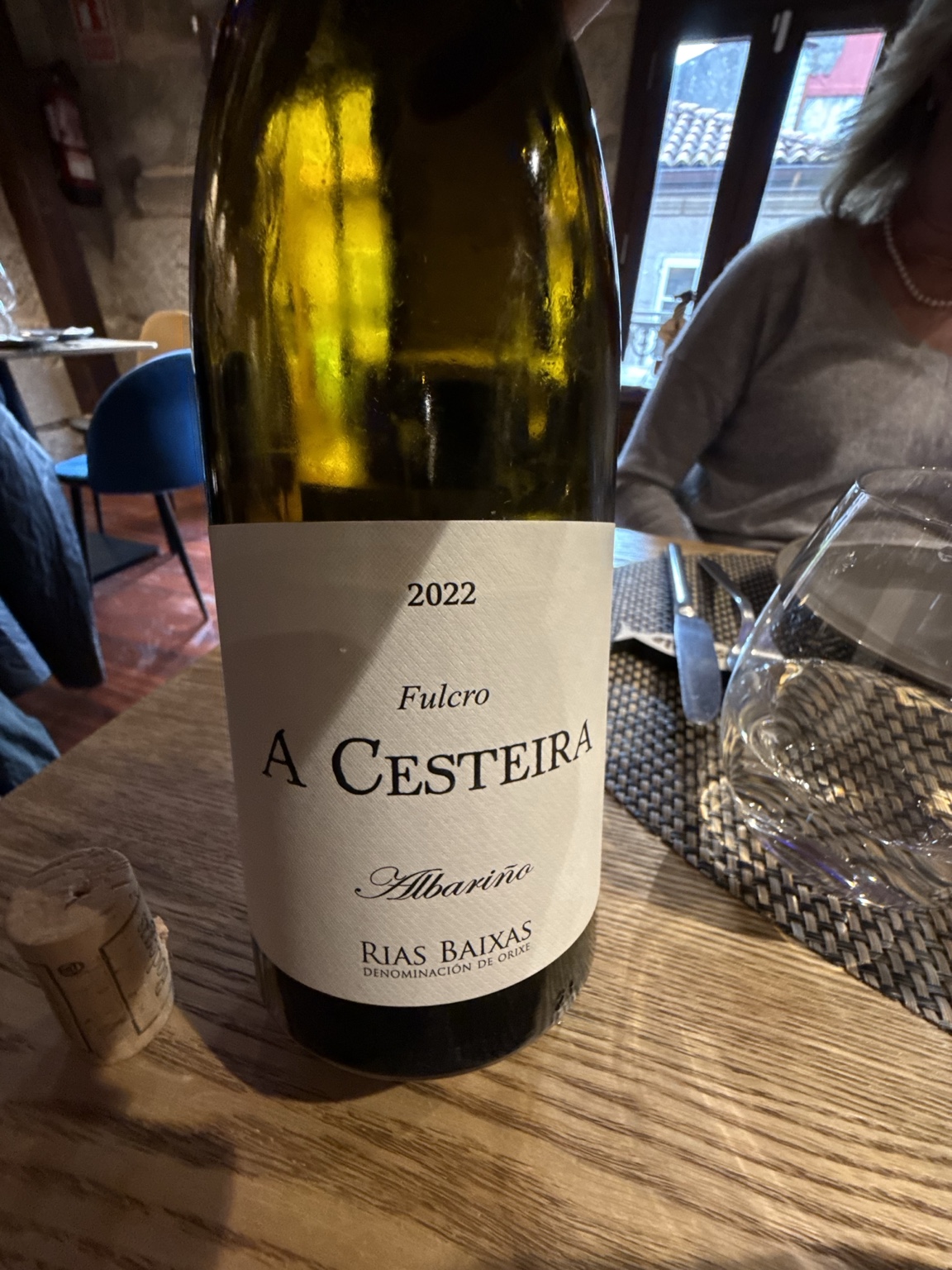
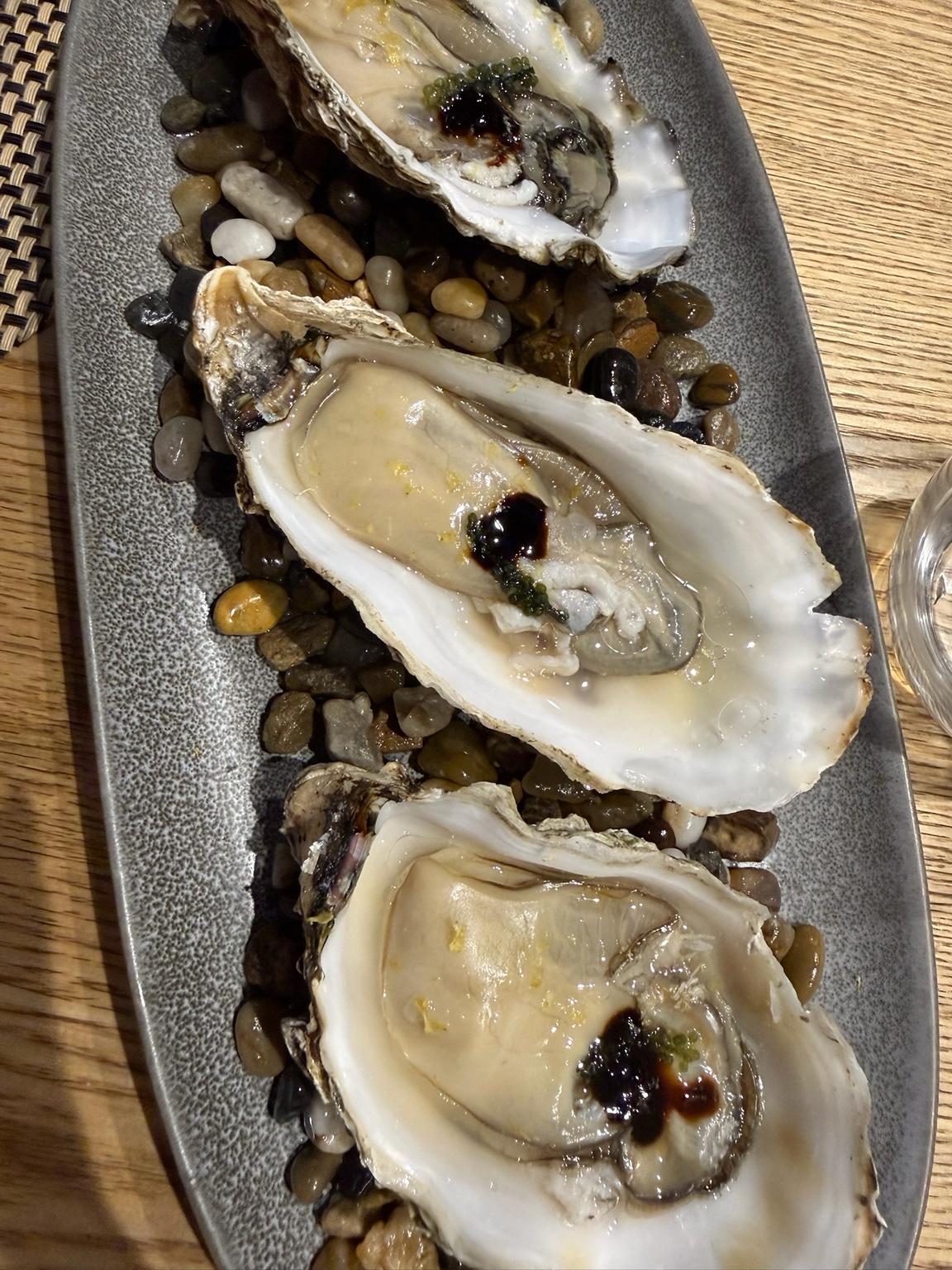
The first Albariño that felt like more than simply a glass of wine was a 2022 Fulcro A Cesteira, shared at Trasmallo in Pontevedra on the evening we celebrated Lynn’s birthday.
With oysters beside it, the pairing was like a perfect kiss: bright, briny, fresh, and completely connected to the coast we had just been walking. We followed it with another delicious wine—different from the first—a Murriñus Viño Branco.
Those wines became part of the journey—not separate from the landscape, but another way of understanding it.
Arcade
A lunch worth walking off.
One of the greatest discoveries of the entire journey—on or off the Camino—was lunch at Restaurante Brasa Mar in Arcade.
We shared grilled scallops, whole roasted sole, grilled ribeye with homemade potato “chips,” and a beautifully simple tomato salad, along with a bottle of rosé whose name none of us managed to record. It was generous, delicious, and one of our unanimous favorites. Although we tried, we never found scallops prepared as beautifully as those at Brasa Mar. In fact, it was one of my top ten favorite meals of all time.
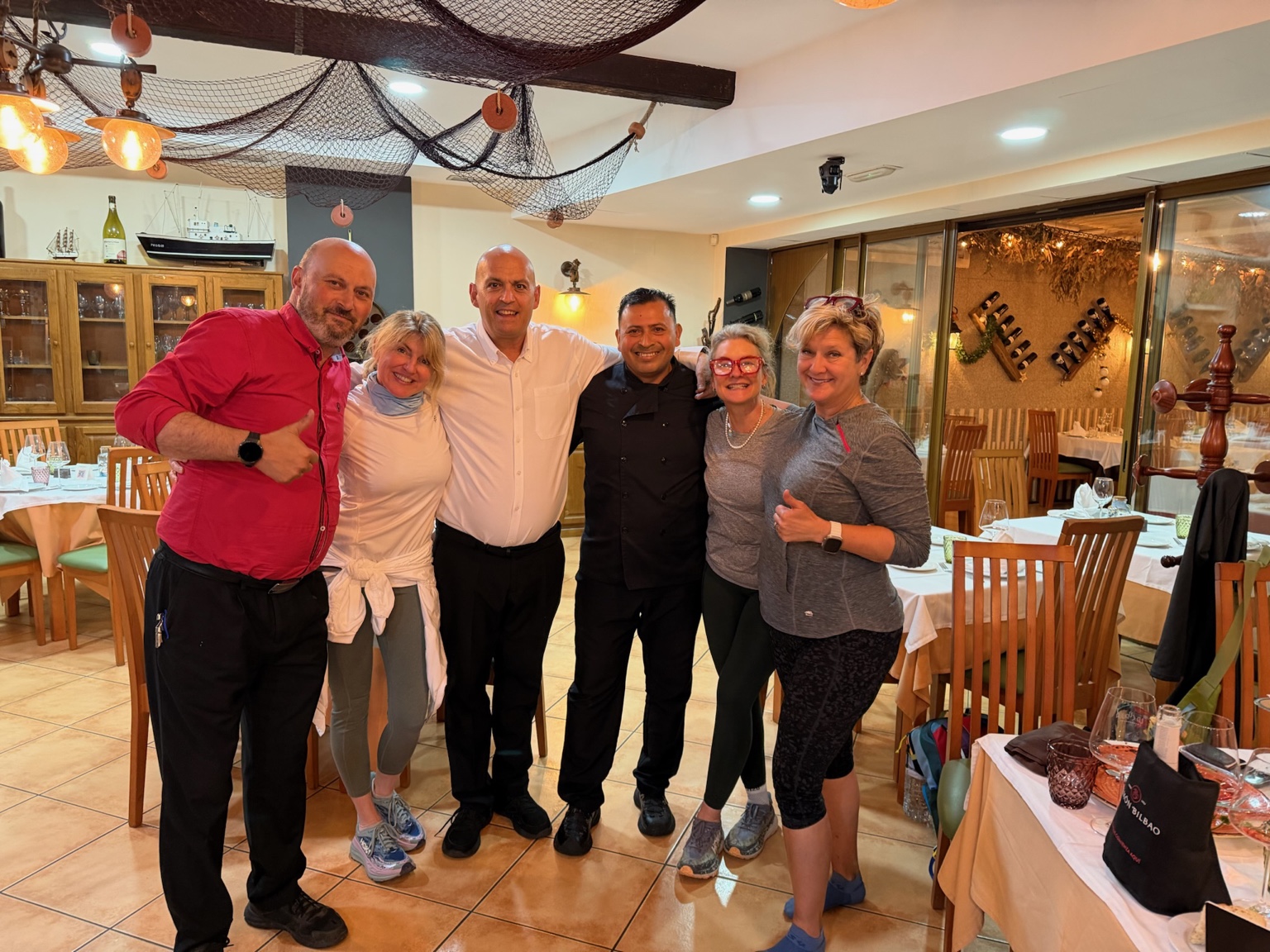
Afterward, we took a photograph with the chef and servers—very full, very happy, deeply appreciative, and prepared to obligingly walk off every wonderful bite. Literally.
The longest—and wettest—day
One careful step.
Then another.
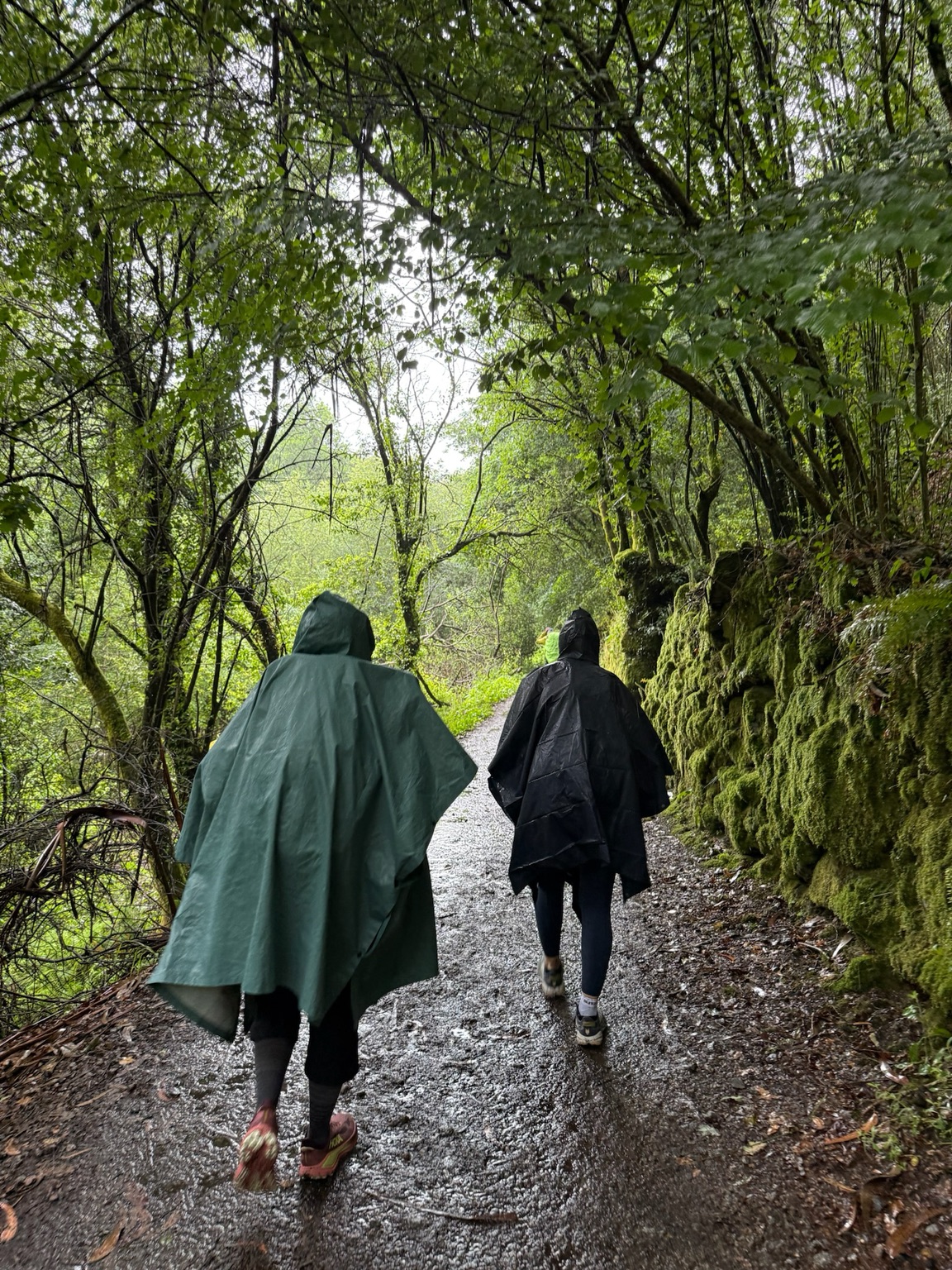
Our longest stage took us 22 kilometers from Pontevedra to Caldas de Reis, and it brought the heaviest rain of the journey.
The water transformed sections of the Camino beneath our feet. Uphill stretches became muddy and slippery, requiring steady footwork, concentration, and a willingness to slow down.
We kept moving, watched out for one another, and eventually arrived with the particular satisfaction that comes from completing something that required a little more determination than expected.
The arrival
Souls shine a little brighter here.
Reaching Santiago de Compostela was, first and foremost, an accomplishment. We had set out with a goal and completed it together, without incident or interruption. There was pride in knowing that, step by step, we had done exactly what we came to do.
But the arrival meant more than completing our own walk. Throughout the city, we encountered people arriving at the end of deeply personal journeys. You could see it in their faces: relief, pride, joy, reflection, and perhaps the feeling that they had discovered something about themselves along the way.
The energy is extraordinary. It feels as though souls shine a little brighter there.
That feeling need not come from a particular religious experience. Santiago de Compostela is spiritual in a much broader sense—a place shaped by accomplishment, grace, forgiveness, generosity, empathy, and the shared understanding that everyone has carried something different along the way.
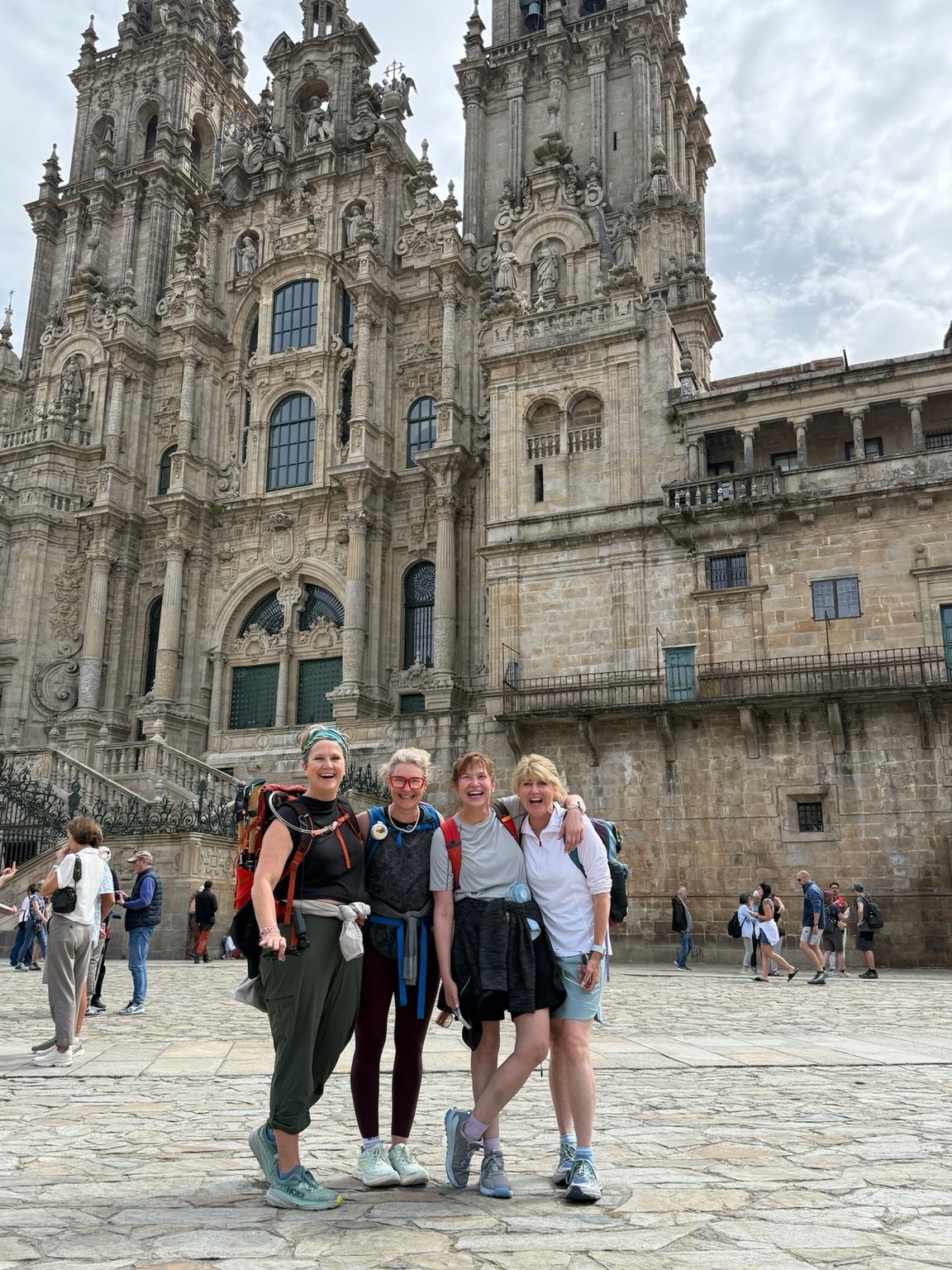
For me, reaching Santiago was both an ending and a beginning. Completing the Camino gave me the impetus to follow another hope I had been carrying: bringing Her Second Pour to life.
The journey reminded me that a next chapter does not have to arrive fully written. Sometimes it begins with choosing a direction, taking the first step, and trusting that meaning will reveal itself along the way.
Wine was the invitation. The journey—the landscape, history, friendship, food, and people—was what carried us toward understanding.
The route
Six days of walking
- May 16Vigo to Redondela · approx. 15 km
- May 17Redondela to Pontevedra · approx. 20 km
- May 19Pontevedra to Caldas de Reis · approx. 22 km
- May 20Caldas de Reis to Padrón · approx. 18 km
- May 21Padrón to O Milladoiro · approx. 16 km
- May 22O Milladoiro to Santiago · approx. 7 km
Where we stayed
Eight nights
- Hotel Maroa · Vigo
- Rúa do Medio · Redondela
- Hotel Galicia Palace · Pontevedra
- Hotel Pousada Real · Caldas de Reis
- Hotel Corona de Padrón · Padrón
- Casa Rural As Bentinas · O Milladoiro
- Parador de Santiago–Hostal dos Reis Católicos